The Unpaid Shift: How North Carolina's Caregiving Crisis Is Costing Women Their Economic Future — and What Kelly Will Do About It
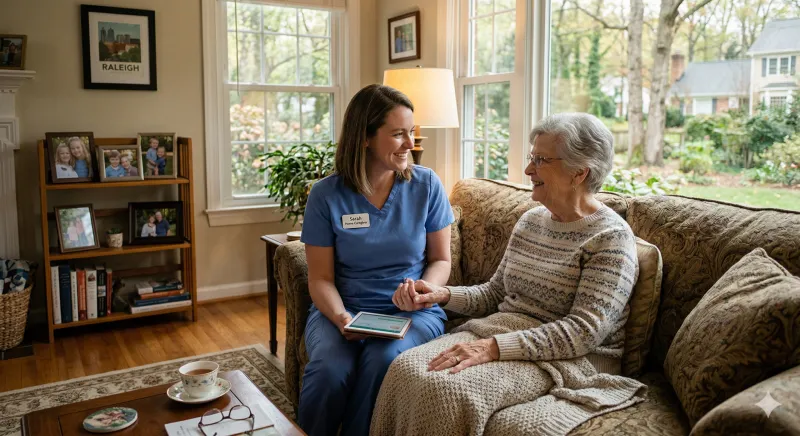
Photo: woman caregiver helping elderly parent at home North Carolina, via www.firstlighthomecare.com
A Workforce Departure No One Is Counting
Every year, thousands of North Carolina women make a calculation that no spreadsheet fully captures. A parent's dementia diagnosis, a sibling's disability, a grandchild in need of stable care — and suddenly, a career that took years to build becomes a secondary concern. The resignation letter gets written. The promotion opportunity passes. The retirement savings stop growing.
This is not a rare personal tragedy. It is a systemic economic crisis unfolding in slow motion across every county in our state, from the mountain communities of the far west to the coastal towns of the Outer Banks. And it disproportionately falls on women.
According to research from the National Alliance for Caregiving and AARP, women account for approximately 60 percent of all unpaid family caregivers in the United States. In North Carolina — a state with one of the fastest-growing senior populations in the country and a significant rural healthcare shortage — that figure carries enormous weight. These women are not choosing leisure over ambition. They are responding to a care infrastructure that has collapsed around them, leaving no viable alternative.
The True Cost of Invisible Labor
The financial toll of unpaid caregiving on women is staggering, yet it rarely appears in economic reports or policy discussions. A woman who reduces her hours to part-time status to care for an aging parent does not simply lose today's wages. She loses employer-sponsored health benefits, retirement contributions, and the compounding value of career advancement that would have followed. She sacrifices Social Security credits that would have strengthened her retirement security decades from now.
Researchers at MetLife have estimated that the average woman loses more than $300,000 in wages, pension benefits, and Social Security income over her lifetime as a direct result of caregiving-related workforce interruptions. In a state where the gender wage gap already places North Carolina women behind their male counterparts, this additional penalty compounds an injustice that has gone unaddressed for far too long.
The consequences extend well beyond individual households. When skilled workers exit the labor force prematurely, businesses lose institutional knowledge and productivity. Communities lose the tax revenue and consumer spending that employed workers generate. Rural economies — already fragile in many parts of North Carolina — absorb these losses with particular severity, as women in small towns and agricultural communities often have fewer options for formal caregiving support than their urban counterparts.
The Sandwich Generation and the Weight It Carries
North Carolina's caregiving crisis does not fit a single profile. Many women find themselves caught between generations — simultaneously raising children or caring for grandchildren while also supporting elderly or disabled family members. This so-called "sandwich generation" reality is particularly pronounced among women of color and low-income families, who are less likely to have access to paid care alternatives and more likely to live in multigenerational households out of economic necessity rather than preference.
For these women, the question is never whether to provide care. It is how to survive economically while doing so. The answer, far too often, involves leaving a job entirely, declining a leadership opportunity, or accepting a lower-wage position that offers the flexibility a demanding corporate schedule cannot.
This is not a failure of individual ambition. It is a failure of public policy.
Kelly's Framework for Caregiver Support and Economic Equity
Kelly believes that a state serious about economic justice cannot continue to externalize the cost of caregiving onto the women who provide it. The platform Kelly is bringing to North Carolina voters addresses this crisis through a coordinated set of policy reforms designed to support caregivers, protect their economic standing, and build the infrastructure families desperately need.
Expanding Paid Family and Medical Leave Protections
North Carolina currently lacks a comprehensive paid family and medical leave program, leaving caregivers with a stark and unfair choice between income and family responsibility. Kelly supports the establishment of a statewide paid leave program that covers caregiving for elderly parents, disabled family members, and seriously ill relatives — not just newborns. A functioning paid leave system would allow women to step away from work temporarily without permanently derailing their careers or financial security.
Investing in Affordable, Accessible Respite Care
One of the most consistent findings in caregiving research is that respite care — temporary relief services that allow primary caregivers to rest, work, or attend to personal needs — dramatically reduces burnout and workforce departure. Kelly's plan includes targeted investment in community-based respite programs, with particular emphasis on rural counties where such services are virtually nonexistent. These investments would be structured to serve low- and moderate-income families who currently have no access to relief.
Strengthening Workplace Protections for Caregivers
Many North Carolina women report facing informal workplace penalties for caregiving responsibilities — passed over for promotion, sidelined from high-visibility projects, or pressured to resign. Kelly supports expanding anti-discrimination protections to explicitly cover caregiver status, ensuring that women cannot be penalized professionally for fulfilling family obligations that society itself has failed to accommodate through adequate public infrastructure.
Reforming Tax Policy to Recognize Caregiving Costs
The financial burden of caregiving — whether it involves purchasing supplies, modifying a home, or paying for occasional professional support — is largely invisible in current tax policy. Kelly advocates for enhanced caregiver tax credits that reflect the real economic contributions of unpaid care work, providing meaningful relief to families absorbing costs that would otherwise fall to the public sector.
Building a Statewide Caregiver Navigation System
One of the most commonly cited barriers for caregivers in North Carolina is simply not knowing what resources exist or how to access them. Kelly's platform includes funding for a coordinated statewide navigation system — accessible by phone, online, and through community health workers — that connects caregivers with available services, benefits, and support networks. No North Carolina family should fall through the cracks because the system was too complicated to navigate alone.
Caregiving Is Economic Policy
There is a tendency in political discourse to treat caregiving as a social issue — a matter of family values and personal responsibility — rather than as the core economic question it actually is. Kelly rejects that false distinction entirely.
When North Carolina women are forced out of the workforce to fill gaps that public policy should be addressing, the entire state economy absorbs the cost. When talented professionals leave their fields in mid-career because no viable caregiving infrastructure exists, businesses and communities lose. When women arrive at retirement age with diminished savings and reduced Social Security benefits because of decades of unpaid labor, the social safety net bears the burden.
Investing in caregivers is not charity. It is economic strategy. It is how North Carolina builds a workforce that is genuinely competitive, a retirement system that is genuinely secure, and a state where women's economic contributions — visible and invisible alike — are finally treated with the respect they deserve.
Kelly is running for office because North Carolina's working families cannot afford another generation of half-measures and neglect. The women carrying the weight of our care economy have waited long enough for a seat at the table where decisions about their lives are made. That changes now.