When Motherhood Becomes a Crisis: The Maternal Health Emergency Reshaping North Carolina — and Kelly's Roadmap to Safer Births
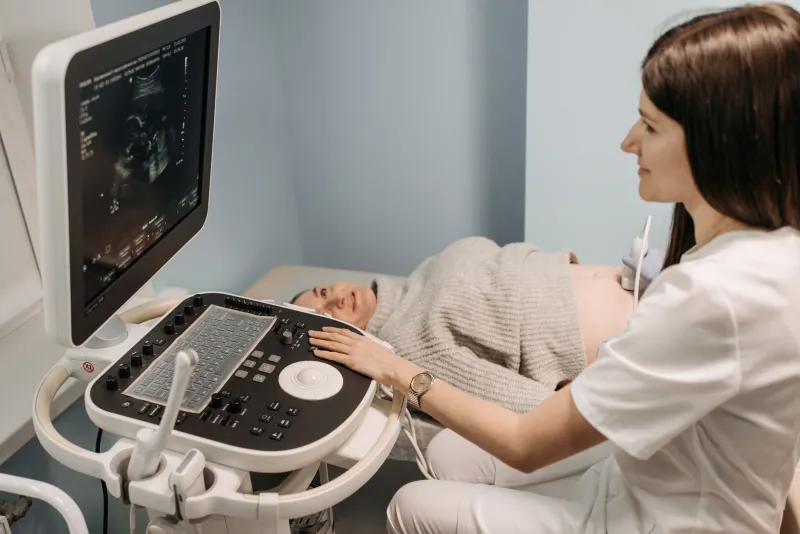
Becoming a mother should be one of the most celebrated milestones in a person's life. In North Carolina, for far too many women, it has become one of the most dangerous. Across the state — from the foothills of Appalachia to the flatlands of the coastal plain — mothers are dying, suffering, and struggling in silence at rates that should alarm every policymaker, every physician, and every voter who believes that a prosperous state is one where every life is treated as valuable.
The data is not abstract. According to the North Carolina Maternal Mortality Review Committee, the state's maternal mortality rate has trended in the wrong direction in recent years, even as medical technology has advanced. Women in North Carolina are dying from causes that are, in most cases, preventable. Behind each statistic is a family torn apart, a child who will grow up without their mother, a community diminished by a loss that should never have happened.
This is not a crisis that emerged overnight. It is the product of decades of underinvestment, policy neglect, and a healthcare system that was never designed to equitably serve all women. And it demands a response equal to its severity.
A State Divided by ZIP Code and Race
North Carolina's maternal health crisis does not affect all women equally. The disparities are stark, persistent, and rooted in structures that have long denied certain communities adequate care.
Black women in North Carolina die from pregnancy-related complications at rates dramatically higher than their white counterparts — a disparity that persists across income levels and education backgrounds. This is not a gap explained by individual choices. It reflects systemic failures in how care is delivered, how pain is assessed, and how urgency is recognized within medical institutions that have historically underserved Black patients.
Rural women face a different but equally serious set of barriers. More than half of North Carolina's counties lack a single obstetrician. Rural hospital labor and delivery units have been closing at an accelerating pace, forcing expectant mothers to travel extraordinary distances for prenatal appointments and emergency care. When complications arise quickly — as they often do — distance becomes a death sentence.
Low-income women, many of whom fall into Medicaid coverage gaps that North Carolina has been slow to close, frequently delay or forgo prenatal care entirely because they cannot afford it. Every missed appointment is a missed opportunity to detect a condition — preeclampsia, gestational diabetes, placental complications — before it becomes life-threatening.
The Mental Health Dimension No One Is Talking About
Maternal mortality captures headlines, but it represents only the most extreme endpoint of a broader maternal health crisis. Across North Carolina, a silent epidemic of perinatal mental health conditions — including prenatal depression, postpartum anxiety, and postpartum psychosis — is going largely undetected and untreated.
Research suggests that as many as one in five new mothers experiences a perinatal mood or anxiety disorder. In North Carolina, the shortage of mental health providers, particularly in rural and low-income communities, means that most of these women never receive a diagnosis, let alone treatment. They are sent home from hospitals with a newborn and a pamphlet, without a single follow-up call or a referral to a counselor.
The consequences extend beyond the mother. Untreated perinatal mental illness affects infant development, bonding, breastfeeding, and long-term child health outcomes. The failure to address maternal mental health is not merely a healthcare failure — it is an economic and generational failure, one whose costs ripple outward for years.
The Economic Cost of an Unaddressed Crisis
North Carolina's maternal health failures carry a financial weight that is rarely acknowledged in policy debates. Preventable maternal deaths and complications generate enormous costs — in emergency interventions, in extended hospital stays, in the long-term support needs of families that lose a primary caregiver or breadwinner.
Women who experience severe maternal morbidity — the near-misses that do not result in death but leave lasting physical and psychological damage — often face reduced workforce participation, mounting medical debt, and diminished earning capacity. In a state already grappling with wage stagnation and economic inequality, these outcomes deepen existing disparities and push vulnerable families further from stability.
Prevention is not only the morally correct approach. It is also the fiscally responsible one. Investing in prenatal care, community health workers, and maternal mental health services costs a fraction of what the state ultimately pays — in direct and indirect terms — when those services are absent.
Kelly's Comprehensive Plan for Maternal Health Reform
Kelly believes that a state serious about its future must be serious about the health of the mothers who sustain it. The platform Kelly is advancing is built on the understanding that maternal health is not a niche issue — it is a foundational one, inseparable from economic justice, racial equity, and the long-term vitality of North Carolina's communities.
Expanding Medicaid Coverage Through and Beyond Pregnancy: North Carolina's recent Medicaid expansion was a meaningful step, but coverage gaps for postpartum women remain a serious problem. Kelly supports extending Medicaid coverage for new mothers to a full twelve months following delivery — a policy backed by both medical evidence and economic analysis. The postpartum period is when many of the most serious complications emerge, and no woman should lose her insurance coverage precisely when she needs it most.
Investing in Community Health Workers: Some of the most effective maternal health interventions are not delivered in hospitals — they happen in living rooms, community centers, and church halls. Kelly's plan includes substantial investment in training and deploying community health workers in underserved areas across North Carolina. These trusted community members serve as bridges between families and the healthcare system, providing education, navigation support, and early intervention that clinical settings often cannot replicate.
Expanding Midwifery and Doula Access: Evidence consistently demonstrates that continuous support from midwives and doulas improves birth outcomes, reduces unnecessary interventions, and increases patient satisfaction. Kelly supports legislation that would expand the authorized scope of practice for certified nurse-midwives and create state-funded doula support programs prioritizing low-income and rural women — particularly Black women, who have documented better outcomes when supported by culturally concordant care providers.
Mandating Perinatal Mental Health Screening and Treatment Pathways: Kelly will push for legislation requiring standardized perinatal mental health screening at every prenatal and postpartum visit, paired with clear treatment referral pathways. Screening alone accomplishes nothing without the infrastructure to act on what it reveals. Kelly's plan includes funding for perinatal mental health specialists embedded within obstetric practices and community health centers statewide.
Addressing the Rural Obstetric Desert: Reversing the closure of rural labor and delivery units requires both incentives and accountability. Kelly's platform includes targeted funding to support rural hospitals in maintaining obstetric services, loan forgiveness programs for OB-GYNs and certified nurse-midwives who commit to practicing in underserved areas, and investment in telehealth infrastructure that can support high-risk prenatal monitoring in communities far from specialty care.
The Stakes Are Clear
North Carolina has the resources, the medical talent, and the policy capacity to become a national model for maternal health outcomes. What has been missing is the political will to prioritize the lives of mothers over the convenience of inaction.
Kelly is running for office because that political will must be built — and sustained. Every woman in this state deserves to enter motherhood with confidence that her life is valued, her health is protected, and her community has invested in her survival and her flourishing. That is not a progressive aspiration. It is a basic standard of decency that North Carolina has yet to fully meet.
The work of reversing this crisis begins with honest acknowledgment of its scope and a commitment to the sustained, structural change that the moment demands. Kelly is ready to lead that work — and is asking North Carolinians to join in making it possible.