Priced Out of Home: The Housing Emergency Reshaping North Carolina Communities and Kelly's Plan to Fight Back
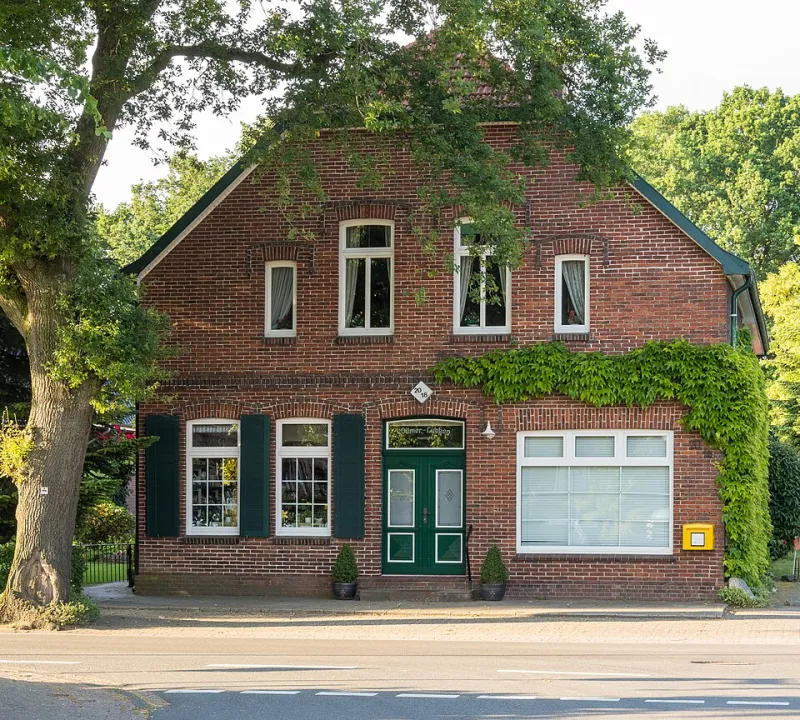
Photo: City of Greenville, North Carolina, Public domain, via Wikimedia Commons
Three years ago, Janelle and her husband could afford a two-bedroom apartment in east Charlotte on their combined income — she works as a school cafeteria supervisor, he drives for a regional freight company. Then their landlord sold the building. The new ownership group raised the rent by 38 percent within eighteen months. Janelle's family now lives forty minutes from her school, in a town where they know no one, because it was the nearest place they could afford.
"We didn't leave Charlotte," she said. "Charlotte left us."
That sentence captures something essential about what is happening in North Carolina right now. This is not simply a market correction or the natural consequence of a growing state. It is a displacement crisis — systematic, accelerating, and affecting the very people communities cannot function without. Teachers, nurses, firefighters, restaurant workers, childcare providers: the essential workforce that makes North Carolina's cities and towns livable is being methodically priced out of them.
How We Got Here: A Crisis Decades in the Making
North Carolina's housing affordability emergency did not emerge overnight. It is the product of intersecting forces that have been building for years and have now reached a critical threshold.
The state's rapid population growth — driven by corporate relocations, remote work migration, and a relatively lower cost of living compared to coastal metros — has dramatically outpaced housing construction in many markets. The Research Triangle, the Charlotte metropolitan area, and increasingly mid-sized cities like Asheville, Wilmington, and Greenville have seen demand surge while supply has remained constrained by a combination of exclusionary zoning rules, slow permitting processes, and limited public investment in affordable housing development.
Simultaneously, institutional and speculative investment in residential real estate has intensified. Large investment firms have acquired significant portfolios of single-family homes and apartment complexes across the state, often prioritizing rapid rent increases and short-term returns over the stability of long-term tenants. In some North Carolina markets, corporate landlords now own a substantial share of available rental stock — a dynamic that fundamentally alters the balance of power between renters and property owners.
The result is a market that works exceptionally well for investors and extremely poorly for the families who simply need a stable place to live.
The Numbers Behind the Stories
The data is unambiguous. Median home prices in the Charlotte region have increased by more than 60 percent over the past five years. Raleigh and Durham have seen similar trajectories. Asheville, long celebrated for its cultural vitality, now ranks among the least affordable mid-sized cities in the southeastern United States relative to local wages.
For renters, the situation is particularly acute. Housing advocates define affordability as spending no more than 30 percent of gross income on housing costs. Across North Carolina, a growing proportion of renter households are now classified as "cost-burdened," spending between 30 and 50 percent of their income on rent. A significant subset are "severely cost-burdened," spending more than half their earnings on housing — leaving dangerously little for food, transportation, healthcare, and savings.
Young families are delaying or abandoning homeownership entirely. First-generation homebuyers, who have historically relied on modest savings and stable entry-level home prices to build intergenerational wealth, are finding the door to ownership increasingly shut. The racial dimensions of this crisis are impossible to ignore: Black and Latino households in North Carolina face both higher rates of housing cost burden and greater exposure to discriminatory practices in rental and lending markets.
Kelly's Housing Agenda: Comprehensive, Targeted, and Urgent
Kelly approaches the housing crisis as what it is: a systemic failure that demands systemic solutions. The platform is built around four interconnected pillars.
Zoning Reform That Unlocks Supply
North Carolina's municipalities have long relied on single-family zoning rules that restrict the construction of duplexes, townhomes, accessory dwelling units, and small multifamily buildings in large swaths of residential land. These restrictions, originally designed to enforce racial and economic segregation, now function as a structural barrier to housing production at the scale the state needs.
Kelly supports state-level incentives — tied to transportation and infrastructure funding — that encourage municipalities to modernize their zoning codes, streamline permitting for missing-middle housing types, and allow higher-density development near transit corridors and employment centers. This is not an assault on neighborhood character. It is an acknowledgment that the status quo is failing working families.
Public and Nonprofit Development Investment
The private market alone will not solve a crisis it helped create. Kelly's plan includes a significant expansion of the state's investment in community land trusts, nonprofit housing developers, and public-private affordable housing partnerships. Community land trusts — which retain ownership of land while selling or renting the structures on it — have proven remarkably effective at creating permanently affordable housing that remains accessible across generations, insulated from speculative pressure.
Kelly also proposes expanding and strengthening the state's Low-Income Housing Tax Credit program and creating a dedicated affordable housing infrastructure fund to support the construction of units serving households at the lowest income levels — a segment the private market has almost no incentive to serve.
Renter Protections Against Displacement
For the more than one million North Carolina households who rent their homes, policy changes that expand housing supply will take time to materialize. In the interim, protections against predatory practices are essential. Kelly supports legislation requiring meaningful notice periods before significant rent increases, prohibiting retaliatory evictions, and establishing a statewide right to counsel for tenants facing eviction proceedings — a reform that research consistently shows reduces wrongful evictions and housing instability.
Kelly also supports transparency requirements for large corporate landlords, including public disclosure of ownership structures and rent increase histories, so that policymakers and communities can understand the true scope of institutional investment in residential real estate.
Addressing Speculative Investment
The unchecked acquisition of residential properties by large investment entities represents a genuine threat to housing affordability and community stability. Kelly supports measures that discourage the conversion of owner-occupied and long-term rental housing into short-term vacation rentals in housing-stressed markets, as well as policies that create financial disincentives for the large-scale hoarding of residential properties held vacant for speculative purposes.
A Home Is Not a Luxury
There is a version of the housing conversation that treats affordability as a lifestyle preference — as though the families being displaced simply chose not to prioritize stability. Kelly rejects that framing entirely.
Stable housing is the foundation upon which everything else in a person's life is built. Children who move frequently perform worse in school. Adults without stable housing face dramatically worse health outcomes. Communities that cannot retain their essential workforce lose the civic and economic fabric that makes them worth living in.
North Carolina is worth fighting for. Janelle and her family are worth fighting for. And Kelly intends to bring that fight directly to the legislature, the zoning boards, and every conversation about what kind of state we want to be.
Because a state that prices out its own people is not a state that is truly thriving — no matter what the headline economic numbers say.