Potholes, Pipe Failures, and Broken Promises: The Infrastructure Debt North Carolina Families Are Paying Every Day
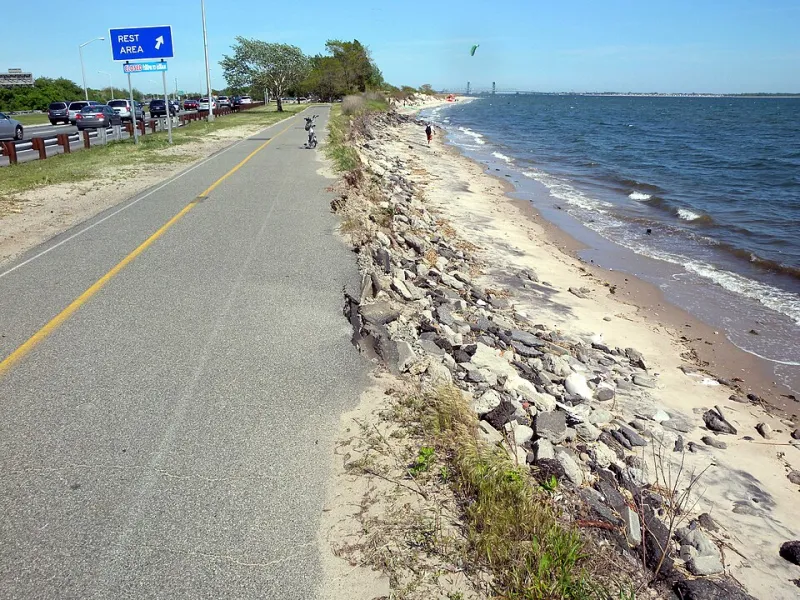
Photo: Jim.henderson, Public domain, via Wikimedia Commons
In the spring of 2022, residents of a small community in Halifax County began noticing a brown tinge in their tap water. Within weeks, testing confirmed elevated levels of iron and sediment — the result of corroded pipes that had not been meaningfully upgraded in more than four decades. Families were advised to use bottled water for drinking and cooking. For households already stretched thin by inflation and stagnant wages, that advisory carried a real and immediate financial cost.
"We were spending thirty, forty dollars a week on bottled water," recalled one resident who spoke with Kelly's policy team during a community forum. "That's money that was supposed to go toward groceries. Nobody came out here to fix anything fast. We were just supposed to wait."
This is not an isolated incident. Across North Carolina — in urban neighborhoods, rural townships, and mid-sized cities alike — aging infrastructure is exacting a toll that is measured not only in dollars but in health outcomes, lost economic opportunity, and eroding public trust.
The Scale of the Problem
North Carolina's infrastructure challenges are substantial and well-documented. The American Society of Civil Engineers has given the state's infrastructure a mediocre grade across multiple categories, citing deficiencies in roads, bridges, drinking water systems, and stormwater management. According to state transportation data, hundreds of bridges across North Carolina are classified as structurally deficient or functionally obsolete — meaning they either cannot safely carry the loads they were designed for or no longer meet modern traffic standards.
The road conditions are equally concerning. North Carolina drivers lose an estimated average of hundreds of dollars per year in additional vehicle maintenance costs — tire damage, alignment problems, suspension wear — attributable directly to deteriorating road surfaces. For families commuting long distances to reach employment centers, those costs are not trivial. They represent a regressive infrastructure tax paid disproportionately by people who can least afford it.
Water infrastructure presents perhaps the most urgent public health dimension. The Environmental Protection Agency estimates that North Carolina faces billions of dollars in drinking water and wastewater infrastructure investment needs over the coming decades. Many of the state's water systems rely on pipes installed in the mid-twentieth century — infrastructure that has long exceeded its intended service life. Lead service lines, while less prevalent than in some northern states, remain a documented concern in several communities, particularly those serving lower-income populations.
Who Bears the Burden
Infrastructure deterioration does not affect all North Carolinians equally. Rural communities, which often lack the tax base to fund capital improvements independently, tend to carry older and more fragile systems. Eastern North Carolina, which has faced compounding challenges from hurricane flooding, agricultural runoff, and decades of underinvestment, confronts some of the most acute infrastructure deficits in the state.
Within urban areas, the burden frequently falls along lines of race and income. Neighborhoods that were historically redlined or subjected to disinvestment often contain the oldest infrastructure — streets that were last repaved during a different era, stormwater systems that overflow during moderate rain events, and sidewalks so deteriorated as to be impassable for residents with mobility limitations.
Dr. Anita Rasheed, a public health researcher at a North Carolina university who has studied the relationship between infrastructure quality and health outcomes, framed the issue starkly during a conversation with Kelly's campaign: "When we talk about water quality, road safety, or access to functional public facilities, we are talking about the social determinants of health. Infrastructure is health policy. They are not separate conversations."
This insight shapes Kelly's approach to the issue in a meaningful way — and explains why infrastructure investment appears within a healthcare policy framework. The physical conditions of communities are inseparable from the health of the people who live within them.
The Economic Argument for Investment
Beyond the immediate quality-of-life and health implications, deteriorating infrastructure carries a significant economic cost that affects North Carolina's competitiveness. Businesses evaluating locations for expansion or relocation assess infrastructure quality as a core factor. Reliable water systems, well-maintained transportation corridors, and modern public facilities signal to employers that a community is capable of supporting a workforce and supply chain.
Conversely, crumbling infrastructure is a deterrent. When a distribution company cannot confidently route heavy trucks through a county because bridge weight limits have been reduced due to structural concerns, that county loses economic activity. When a manufacturing facility must invest in private water treatment because the municipal system is unreliable, that cost is either absorbed — reducing profitability — or passed on to consumers.
The job creation dimension of infrastructure investment is equally significant. Construction, engineering, skilled trades, and project management positions generated by infrastructure projects tend to pay wages that support families and circulate within local economies. Kelly's infrastructure investment plan is designed explicitly to prioritize contractors who hire locally and pay prevailing wages, ensuring that the economic benefits of rebuilding North Carolina flow to North Carolina workers.
Kelly's Infrastructure Investment Framework
Kelly's plan approaches infrastructure not as a collection of isolated repairs but as a systemic investment in the conditions that make communities livable, healthy, and economically viable. The framework is organized around several interconnected priorities.
Water System Modernization. Kelly supports a dedicated state infrastructure fund, leveraging federal dollars available through the Infrastructure Investment and Jobs Act, to accelerate the replacement of aging water mains, wastewater treatment facilities, and stormwater systems — with priority given to communities that demonstrate documented public health risk or have been chronically underserved by prior investment cycles.
Transportation Equity. Rather than concentrating transportation investment in corridors that already receive disproportionate attention, Kelly's plan directs a meaningful portion of state transportation funding toward rural roads and bridges that have been deferred for years. Structural assessments would be made publicly available, and communities would have a formal mechanism to flag concerns and receive timely responses from state agencies.
Public Facility Standards. Schools, community health centers, libraries, and other public facilities serve as anchors of community life — and many are in a state of significant disrepair. Kelly advocates for a comprehensive statewide assessment of public facility conditions, followed by a prioritized capital investment schedule that ensures no child is educated in a building that poses a health or safety risk.
Transparent Accountability. Every dollar of infrastructure investment under Kelly's plan would be subject to public reporting, with outcomes tracked against defined benchmarks. North Carolina families deserve to know not only that money is being spent, but whether it is producing measurable improvements in the conditions of their communities.
The Cost of Continuing to Wait
Infrastructure does not fail all at once. It deteriorates gradually, invisibly — until the moment it doesn't. A water main that has been losing pressure for years eventually ruptures. A bridge that has been flagged for monitoring eventually closes. A road that has been deteriorating for a decade eventually becomes impassable.
Each year of deferred investment compounds the eventual cost of repair and multiplies the harm absorbed by the families and communities caught in between. The fiscally responsible choice — and the morally correct one — is to invest now, while the costs remain manageable and the damage is still reversible.
The families of Halifax County, and communities like theirs across North Carolina, have waited long enough. Kelly's commitment is clear: the infrastructure of this state will be treated as the public good it is — and rebuilt with the urgency and equity that North Carolinians deserve.